
Outlaw crypto dossier
Robin Hood
Robin Hood is the legendary English outlaw whose stories move between medieval ballad, political fantasy, and popular entertainment. HOOD CULT uses that myth as a living crypto symbol: a community mask for anyone who wants the market to feel less sterile and more legendary. 1
Overview
Robin Hood belongs to English folklore rather than confirmed biography. Across the tradition he appears as a skilled archer, leader of outlaws, and enemy of corrupt officers, wealthy clerics, and especially the Sheriff of Nottingham. HOOD CULT reframes that symbol for crypto culture: the outlaw as meme, the greenwood as network, and the hood as shared identity.
The cultic power of Robin Hood is not that he is simple. It is that every age finds a different mask inside the hood.
Why Buy HOOD CULT?
You do not buy $HOODCULT because a chart promises salvation. You buy it if you want to join a narrative before it hardens into history: Robin Hood recoded as a crypto cult, a shared signal for holders who prefer myth, symbols, and community raids over anonymous tickers.
Buy the myth
A token with built-in lore has more material for memes, raids, art, quests, and community identity.
Join the greenwood
Telegram and X become the forest: a place to coordinate, spread the symbol, and make the cult visible.
Hold the mask
$HOODCULT gives the community a simple banner: green cloak, black face, feather, arrows, and outlaw energy.
Know the risk
Buy only what you understand. Crypto moves fast, liquidity changes, and no cult can repeal volatility.
Outlaw Agents
This version keeps the agents as command roles instead of a 3D station. They give the project a clear operating rhythm: narrative, safety, gas awareness, and social raids.
Gas Oracle
Watches Ethereum gas windows and tells the community when trades are expensive or calm.
Lore Scribe
Writes launch posts, cult fragments, raids, and daily greenwood missions.
Contract Sentinel
Repeats the official contract, warns against impostors, and keeps launch links clean.
Raid Captain
Turns Telegram and X activity into simple daily pushes for attention and culture.
Ethereum Gas
The previous 3D version had a live gas oracle. This restored archive keeps the idea, but presents it in a cleaner panel that can be wired to a live endpoint again whenever you want.
Robin Hood Lore
The first clear literary allusion to Robin Hood is usually connected with Piers Plowman, a late fourteenth-century Middle English poem that refers to popular rhymes of Robin Hood. Surviving narrative texts arrive later, especially in fifteenth-century manuscript and early printed witnesses. 1
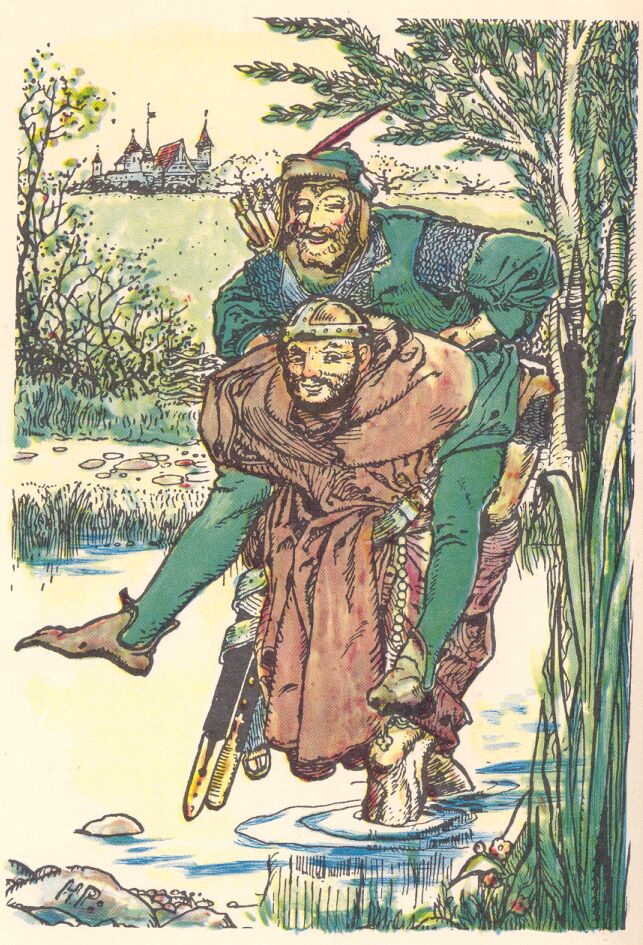
Robin Hood and the Monk is one of the oldest surviving Robin Hood ballads. It contains the Nottingham setting and sheriffly opposition that would become central to the legend. 2
Selected Timeline
- c. 1370s
Piers Plowman alludes to rhymes of Robin Hood.
- c. 1450
Robin Hood and the Monk survives in Cambridge manuscript Ff.5.48.
- c. 1500
A Gest of Robyn Hode preserves a major early outlaw sequence.
- 1883
Howard Pyle publishes The Merry Adventures of Robin Hood.
- Now
HOOD CULT turns the hood into a market-native community symbol.
References
- "Robin Hood," Wikipedia Used as a broad map to the legend's early references, status, ballads, locations, and adaptations.
- "Robin Hood and the Monk," Wikipedia Used for the Cambridge manuscript and status as one of the oldest surviving ballads.
- Howard Pyle, The Merry Adventures of Robin Hood, Project Gutenberg Used for public-domain illustration and nineteenth-century literary afterlife.
- "Robin Hood," Encyclopaedia Britannica Recommended background source for concise encyclopedic framing.